Become the Tester No Team Can Afford to Cut
I'll mentor you through six weeks of live sessions, in a small group of four, to help you move from manual testing into automation. By the end, you'll be able to:
- Build a test automation framework from scratch, starting with an empty folder.
- Write a full test suite and explain every line of code in it.
- Show employers a repository you built yourself.
- Work the way real project teams do, with Jira, Git and CI.
- Walk into interviews with quiet confidence, the kind that only comes from real knowledge.
It's a free 30-minute chat, not a sales pitch. If I don't think it's right for you, I'll tell you.
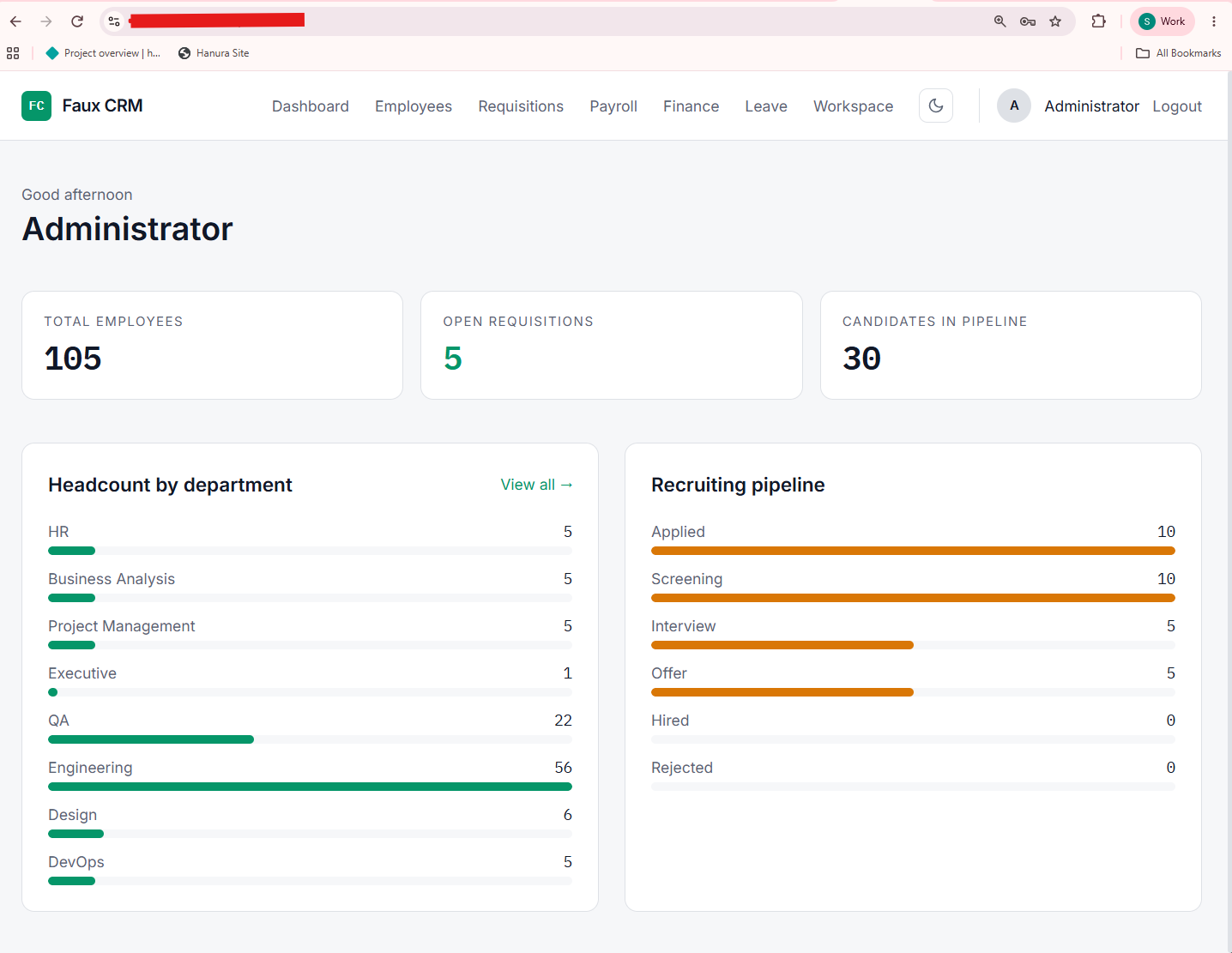
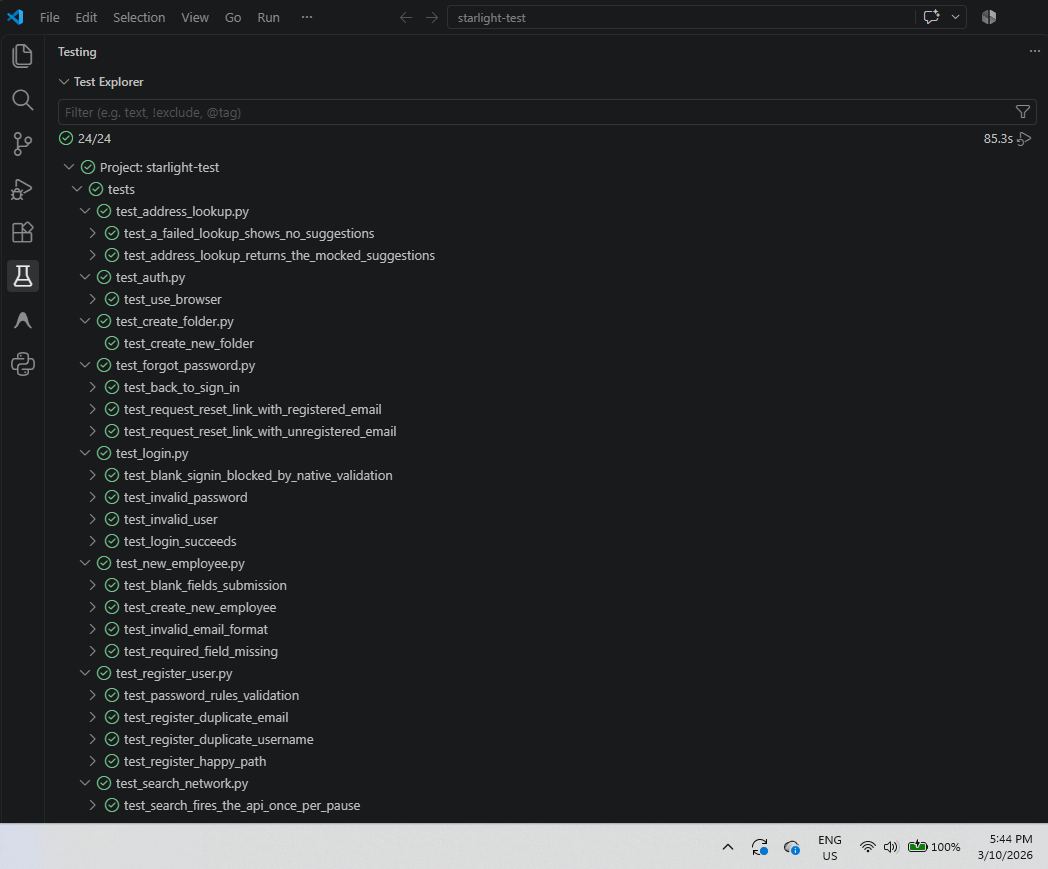
These are real screenshots from the program. Behind is a practice app we test against, filled with made-up data. In front are the tests written for it, all passing. This is the kind of work you'll be doing.
What I Hear From Manual Testers All the Time
I've spoken with a lot of testers over the years, and the same worries come up again and again. Maybe some of these sound like you.
- Every job ad asks for automation. You can do most of what they're asking for, but that one line keeps holding you back.
- You test the same things by hand, every release. You know it could be automated. You just aren't sure where to begin.
- AI is everywhere, and it's unsettling. You're not sure if it will help you in your job or replace you.
- You feel stuck where you are. You've been in the same role for a while, and you can't see how to move up.
If any of this sounds like you, it doesn't mean you're a weak tester. You already know how to think about what might break, and honestly, that's the hard part. Writing code to test it is something you can learn. I'll show you how.
Why Learning on Your Own Is So Hard
Most people I mentor have tried an online course at some point. They watched a few videos, got stuck, and life got in the way. That's completely normal. Learning automation on your own is hard, for a few simple reasons:
- No one checks your code. A video can show you the answer, but it can't tell you what you did wrong.
- Tutorials only take you so far. You can follow along step by step, but when it's time to start your own project, you don't know how to set it up.
- There's no one to ask when you get stuck. So you put it aside, and it's hard to pick back up.
- You have nothing real to show. At the end you have a certificate, but no project you can talk about in an interview.
That's why I keep the groups small. I look at your code every week, and any time you need help with it. You can ask me anything, and you finish with a project you actually built yourself.
Start With the Pain
Everything around us exists to solve a problem. A tool, a technique, an idea. So if you want to really understand something, start with the problem it solves. Then look at how it solves it. Then learn its main parts. In that order.
It sounds obvious, but you'd be surprised how often we skip it. Most of us jump straight into the commands and try to remember them, and that's exactly why it doesn't stick. And once you start looking at things this way, you'll notice that the better a solution fits its problem, the more natural it feels, and the longer it lasts.
I call it P.S.P.™: Pain point, Solution, Parts. And there's one rule that goes with it, an idea often linked to the physicist Richard Feynman: if you can't explain something simply, you don't really understand it yet. So for every tool, you should be able to explain all three in words a Year 6 student would follow. That's the level I'll help you reach.
-
Pain point
What's the problem?
What was hard, slow or annoying before this existed? Always start here. Once you understand the problem, the rest starts to make sense.
-
Solution
How does it fix it?
What's the simple idea behind the fix? You should be able to say it in a sentence or two, without any jargon.
-
Parts
What are the moving parts?
What are the few pieces that make the solution work, and how do they fit together? There are usually only a handful.
By the End of Six Weeks, You'll Be Able To
These are things you'll actually do in the sessions, not just hear about.
- Build full regression suites for complex web applications, starting from an empty folder.
- Test APIs directly, checking requests, responses and the data behind them, without clicking through screens.
- Run your tests automatically every time the code changes, with results ready to share.
- Test databases by writing SQL queries and testing ETL jobs, using safe, made-up test data instead of real customer data.
- Use AI to help write and maintain your tests, and know enough to spot when it gets things wrong.
- Catch bugs manual testing can miss, like visual changes (using screenshot comparisons) and accessibility issues (using axe-core).
- Build a portfolio of real projects you can explain line by line in an interview.
- Stay in touch after week six. I'm still here for your next career move, or the next tricky bug.
Along the way, you'll work hands-on with Python, Playwright, Selenium, Postman, SQL, axe-core, CI/CD, Git, Docker and more, plus the basics of Azure and Kubernetes.
Here's What Members of Our Founding Cohort* Have to Say
“Before I joined, I had a manual testing background and some experience with Selenium, Eclipse and TestNG. However, I didn't have the confidence to start an automation project from scratch or understand the complete workflow, such as working with Jira tickets, GitHub and maintaining the repository. I joined because I wanted to learn that practical process and build my confidence.”
“I'm much more confident now. I can understand the basic Python and Pytest script logic, work with the page structure and folders, review the code, and use GitHub, Copilot and Visual Studio more confidently. I feel much more comfortable working with an automation project now.”
“What has stood out most to me is your one-to-one attention and the clarity with which you explain everything, from the very basics to more advanced concepts. You make sure the fundamentals are clear, and that has really helped me build my confidence.”
“I would definitely recommend the mentorship to manual testers who want to move into automation, as well as people who are at the entry level of automation and want to strengthen their fundamentals and build confidence. The practical guidance helps you understand how to approach different situations, from the small things to the bigger challenges.”
*Founding cohort members were offered their places at no cost, as early participants helping shape the program. These were collected partway through the six weeks, after the fourth session, and are published word for word.
Everything You Get
One price covers all of it. There's nothing extra to pay for later.
- 48 hours of live sessions with me, in a group of no more than four.
- Feedback on your code every week, and whenever you ask for it. I review what you write and help you improve it.
- Real projects you build yourself and can show to employers.
- Help with your resume and interview preparation.
- Recordings of every session, so you can catch up if you miss one.
- The P.S.P.™ method and a one-page template you can use on any tool you learn.
- Ongoing support after the six weeks are over.
How payment works
You pay a small deposit to hold your seat. You don't pay the rest until you've done two weeks of live sessions. That way, you get to see what it's really like before you commit.
I'd rather you decide based on what you've experienced, not on what a website tells you.
Early groups get a reduced founding rate. I share the exact price with people on the waitlist first.
If It's Not for You
I want you to feel safe giving this a go. Here's exactly how it works:
After the first two weeks
If you decide it's not for you, I'll refund your deposit in full. No questions asked, and you won't owe the rest.
At the end of the program
If you attended at least 80% of the sessions and feel it didn't deliver what I promised, I'll refund your full fee. Just let me know within 14 days of the last session.
If life gets in the way
A new job, health, family, anything. You can move to the next group once, at no extra cost, and pick up where you left off.
These are the full terms. You can read the details in the Refund Policy. Nothing here affects your rights under Australian Consumer Law.
Questions People Often Ask Me

Hi, I'm Vijay
I'm an architect and senior IT consultant, and I've spent more than 15 years building data and AI systems. Alongside that, I've mentored manual testers one-on-one for years, helping them make the move into automation.
Hanura Next is that same mentoring, in small groups of four. I teach every session myself. I also love building things with AI, including a Silver-winning solution at the EY FSO Hackathon for a nonprofit.
See the certificateNot Sure Yet? Let's Have a Chat
Book a free 30-minute call. We'll talk about where you are now, where you'd like to be, and whether this mentorship can help you get there. If I don't think it's the right fit, I'll be honest with you.
Each group has just four people. A new group starts once four people are ready, and places are offered in the order people join the waitlist.